


This article presents a comprehensive comparison of homemade and industrial thin pomegranate paste. Key differences in raw materials, production methods, flavor profile, and shelf life are discussed to help consumers make more informed decisions.
Raw Materials and Production Methods of Homemade and Industrial Thin Pomegranate Paste
Homemade thin pomegranate paste is made from fresh, locally harvested pomegranates. The production process is entirely traditional, free from additives or preservatives. After seeding, the pomegranates are juiced, and the juice is slowly simmered over low heat until it reaches a suitable consistency. This manual process is time-consuming and requires great precision to preserve the fruit’s flavor, color, and nutritional value. Because no chemicals are used, homemade paste has a more authentic taste and darker color, with higher nutritional quality compared to industrial versions. However, this method limits production volume and requires refrigeration to prevent spoilage.
Industrial thin pomegranate paste is manufactured in modern factories using automated technology. It may contain additives like preservatives, color stabilizers, and thickeners to enhance shelf life and product uniformity. The production process is faster and on a much larger scale, with precise quality control. Although the mechanized process may reduce some of the natural taste and aroma, hygienic packaging and easier storage are notable advantages. Ultimately, the differences in raw materials and production methods lead to distinct variations in taste, texture, and longevity.
Flavor, Color, and Texture Characteristics of Homemade and Industrial Thin Pomegranate Paste
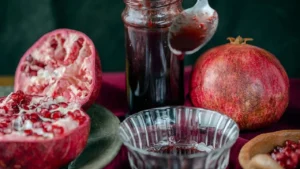
Homemade paste typically has a bold, fresh, and natural flavor with a balanced sweet and sour profile. Since it is made without any additives, the taste remains close to that of fresh pomegranate. Its color is often darker and richer due to extended cooking and the absence of artificial coloring agents. The texture is smooth and thinner, making it easy to blend into various dishes and enhance the final flavor. Consumers who value freshness and authenticity usually prefer this type for traditional or homemade meals.
In contrast, industrial paste offers a more uniform and milder flavor that may be less appealing to some. This is largely due to the use of preservatives and stabilizers that can dull the natural taste. Its color is typically brighter and more consistent, achieved through added color stabilizers. The texture is thicker and sometimes gel-like because of industrial thickeners. These traits make industrial paste more suitable for everyday and bulk use. Ultimately, the choice depends on the consumer’s taste preferences and usage needs.

Advantages and Disadvantages of Homemade and Industrial Thin Pomegranate Paste for Consumers
Homemade thin pomegranate paste, made from fresh and natural ingredients without any preservatives or additives, is ideal for those who prioritize health and food quality. It offers a rich, authentic taste, natural color, and high nutritional value, making it attractive to consumers who prefer organic and traditional products. However, it comes with drawbacks such as shorter shelf life, the need for cold storage, limited production volume, and typically higher cost—which may be a concern for some consumers.
Industrial thin pomegranate paste, on the other hand, offers longer shelf life, easier access, and more affordable pricing, making it a practical choice for everyday household use. Its hygienic packaging and mass production make it convenient to buy and store. Nevertheless, some industrial variants include additives and preservatives that may affect the natural flavor and are not always ideal for long-term consumption. In conclusion, the choice between homemade and industrial paste depends on individual needs, budget, and taste preferences, as both types serve specific purposes.

No views