


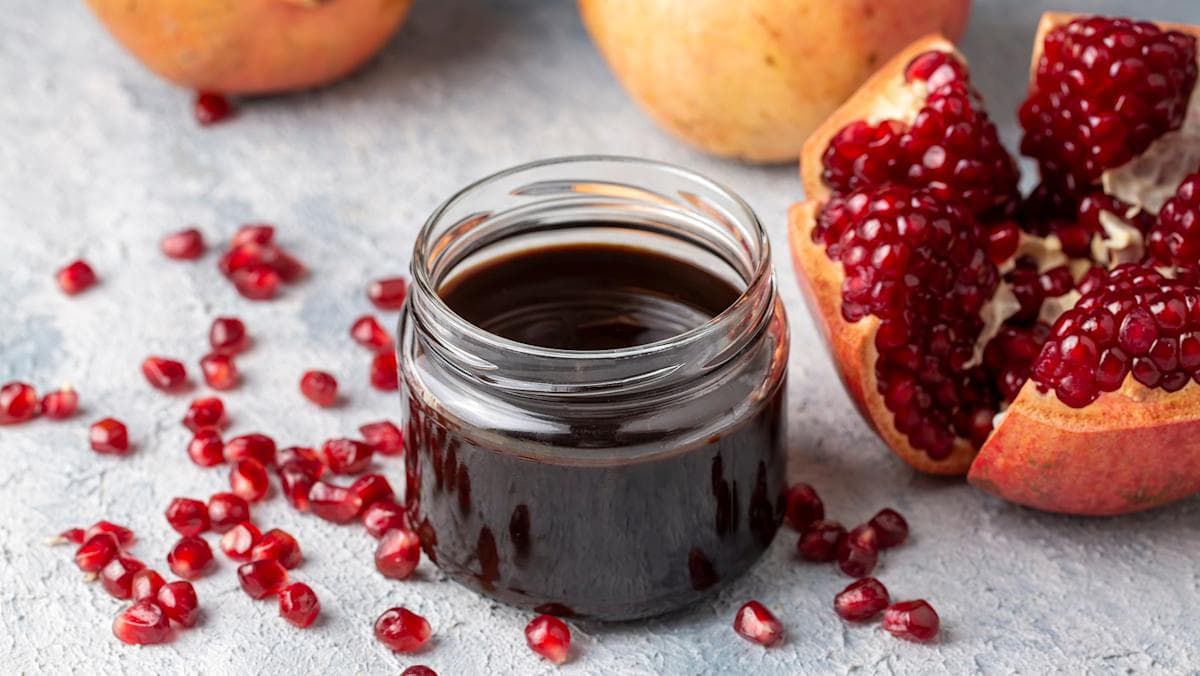
Export-quality homemade pomegranate paste, made using traditional methods and natural ingredients, offers an authentic flavor and exceptional quality appreciated by both domestic and international buyers. It is typically produced without chemical additives, preserving its natural color and aroma. As a result, it is an ideal choice for consumers seeking a healthy, premium-quality product.
Export-Quality Homemade Pomegranate Molasses Features
High-quality export-grade homemade pomegranate paste has unique characteristics that distinguish it from industrial products. The first key feature is the use of fresh, natural pomegranates sourced directly from reputable orchards. These pomegranates are processed without any additives or preservatives, which helps preserve the paste’s natural and authentic taste. Homemade paste is typically prepared using traditional methods, with gentle heating and precise timing to retain beneficial compounds such as antioxidants and vitamins.
The color of export-quality homemade pomegranate paste is usually rich and bright red, indicating freshness and high quality. This natural color attracts customers in both domestic and international markets and is considered a mark of excellence. In addition to taste and color, texture also plays an important role in quality; homemade paste usually has a soft, smooth texture that is easy to incorporate into various dishes.
Another important feature is its pleasant, natural aroma, which, unlike industrial pastes, lacks any artificial or chemical smells. Export-grade homemade paste is also packaged in a way that preserves its flavor and quality, preventing air and moisture from entering. Adherence to hygiene standards in production and packaging is crucial for earning the trust of international buyers.
Ultimately, due to its high quality, authentic flavor, and natural production process, export-quality homemade pomegranate paste is a valuable product that appeals to global markets and can significantly contribute to the country’s export potential.

Advantages and Disadvantages of Industrial Pomegranate Paste in the Export Market
Industrial pomegranate paste has its own set of advantages and disadvantages in the export market, which producers and buyers should understand to make informed decisions.
One of the main advantages of industrial paste is large-scale production and consistent product quality. Factories, using advanced machinery and controlled processes, can produce pomegranate paste in large volumes and to specific standards, making it easier to meet export market demand. Additionally, industrial packaging is usually designed to extend shelf life and facilitate transportation. Including production and expiration dates on packaging also increases buyer confidence.
However, there are drawbacks. In many cases, chemical additives and preservatives are used to improve shelf life and appearance, which can reduce the product’s natural quality and affect its authentic flavor and aroma. Industrial processes can also lead to the loss of some beneficial compounds, such as antioxidants and vitamins.
Furthermore, the color of industrial paste may not always appear natural and can sometimes lack richness or thickness—an issue for buyers in export markets who prioritize quality and authenticity. Some customers may prefer products made through traditional, homemade methods, considering them healthier and more natural.
In summary, while industrial pomegranate paste offers the benefits of mass production and practical packaging, which make it a cost-effective and reliable export option, it is equally important to be aware of potential drawbacks in quality and authenticity.
Key Points in Choosing Quality Export-Grade Pomegranate Paste
Selecting a high-quality export pomegranate paste requires attention to several critical factors to ensure customer satisfaction in international markets. The first is the quality of raw materials. Premium paste is usually made from fresh, ripe pomegranates with a naturally balanced sweet-tart flavor. Using high-quality fruit ensures that the final product has an appealing color, flavor, and aroma.
The second factor is the production method. Traditional or homemade pastes are often prepared with gentle heating and without chemical additives, helping to preserve antioxidants and vitamins. In contrast, industrial pastes must meet hygiene and quality standards to ensure they are free from harmful substances and unauthorized preservatives.
Packaging is another essential consideration. Quality packaging should prevent air, moisture, and contamination from entering, keeping the paste fresh for an extended period. Complete product information—such as production date, expiration date, manufacturer details, and health certification number—should also be clearly displayed on the packaging to build buyer trust.
In addition, color and consistency are important indicators of quality. Premium pomegranate paste usually has a dark red, thick texture, indicating freshness and high quality. A good consistency ensures the paste can be easily used in a variety of dishes.
Finally, pricing should be reasonable and aligned with product quality. Extremely low prices may indicate the use of inferior ingredients or unauthorized additives. Therefore, choosing premium export-quality pomegranate paste requires careful evaluation and attention to detail to ensure success in foreign markets.

No views