


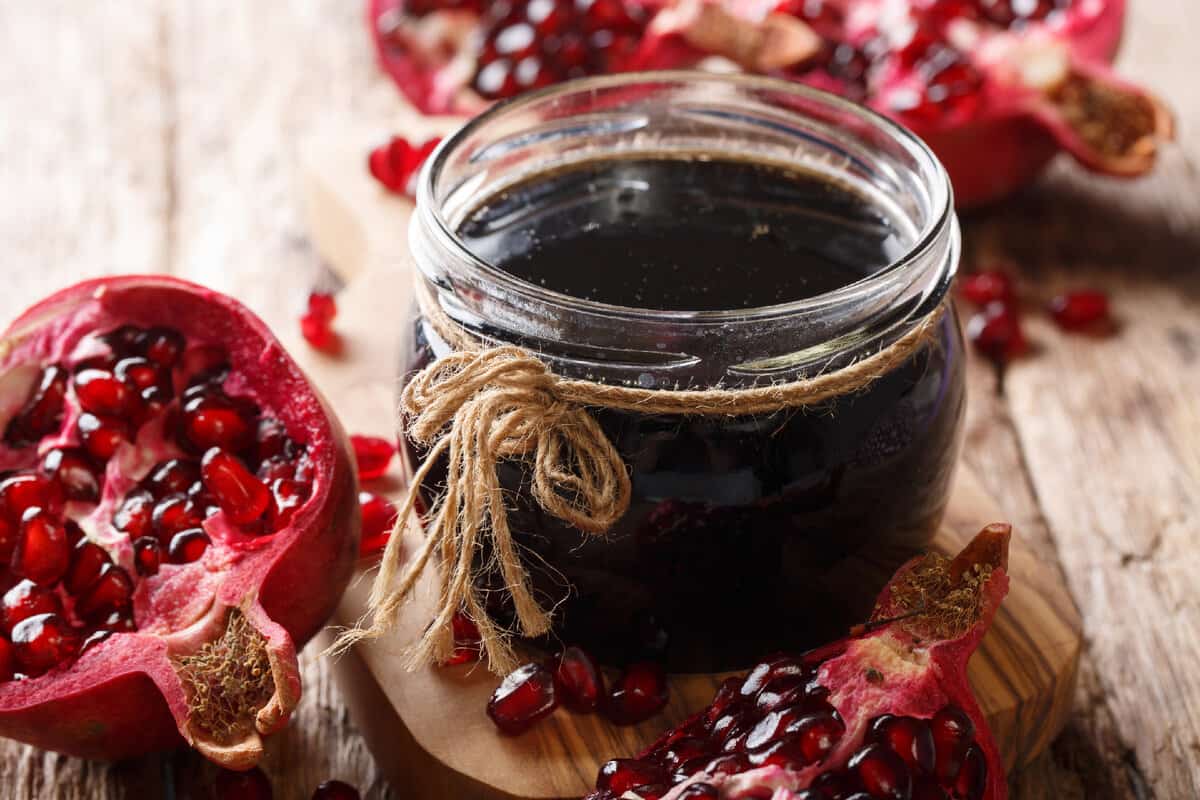
Traditional thin Iranian pomegranate paste, due to its traditional preparation methods and use of fresh pomegranates, offers a unique flavor and natural color that attracts export markets. This type of paste is produced without chemical additives, preserving the beneficial properties of the fruit. In contrast, industrial pomegranate paste benefits from mass production and standard packaging but may lack the natural quality and taste of traditional paste.
Characteristics of Thin, Traditional Iranian Pomegranate Molasses and Its Importance in Exports
As one of Iran’s valuable cultural and nutritional products, traditional thin pomegranate paste holds a special place in export markets. It is usually made from fresh, ripe pomegranates from reputable Iranian orchards, and the production process is carried out manually using traditional methods. One of its most important features is the preservation of the natural taste and authentic aroma of pomegranate, thanks to minimal or no use of chemical additives. This makes traditional thin pomegranate paste not only a flavorful condiment but also a healthy and natural product recognized in global markets.
The color of traditional thin paste typically ranges from bright to dark red, indicating freshness and high quality. Its texture is relatively thinner than concentrated varieties, which makes it highly versatile in different dishes and preferred by foreign consumers for its ease of use. Additionally, it retains the antioxidants and vitamins of pomegranate, well-preserved through traditional production methods.
The importance of traditional thin pomegranate paste in exports lies in its unique taste, high-quality raw materials, and production method. International markets seek products with authenticity and premium quality, and Iranian traditional thin pomegranate paste meets this demand effectively. Moreover, proper packaging and adherence to hygiene standards play a crucial role in building trust with foreign customers.
Ultimately, as a symbol of Iran’s culinary and agricultural quality, traditional thin pomegranate paste has strong potential to increase export market share and promote Iranian agricultural products globally.

Advantages and Disadvantages of Industrial Pomegranate Molasses in International Markets
Industrial pomegranate paste has specific advantages and disadvantages in international markets that producers and exporters should consider. One major advantage is its large-scale production and consistency in product quality. Factories equipped with advanced technology and controlled processes can produce large volumes of paste to fixed standards, essential for meeting export demand. Industrial packaging is often designed to extend shelf life and simplify transportation—important for long-distance exports.
On the downside, industrial paste may use chemical additives and preservatives to improve shelf life and appearance, which can alter the natural taste and aroma of pomegranate. Industrial processes may also reduce antioxidant and vitamin levels, lowering nutritional value.
The color of industrial paste can sometimes appear less natural, with reduced richness or clarity, which may be a drawback for buyers in export markets prioritizing authenticity. Additionally, some consumers prefer traditionally made products for their perceived health benefits and authenticity, making competition tougher for industrial versions.
In summary, while industrial paste offers advantages in mass production and standardized packaging, maintaining quality and flavor is vital for success in international markets.
Strategies for Selecting Quality Thin Pomegranate Molasses for Successful Exports
Selecting quality thin pomegranate paste for export requires attention to several key factors to meet the expectations of foreign markets. The first is assessing raw material quality. Premium thin paste is made from fresh, ripe, high-quality pomegranates with a balanced sweetness and acidity. Using unripe or poor-quality fruit can negatively affect taste and color, reducing customer satisfaction.
The second factor is the production method, which plays a crucial role in preserving natural pomegranate properties. Traditional methods involving gentle heating and no chemical additives preserve antioxidants, vitamins, and natural aroma. Careful control of cooking time and temperature prevents burning or discoloration. Industrial production must also follow strict hygiene and quality standards to ensure safety and flavor consistency.
Packaging is another vital aspect in exports. Packaging should prevent air and moisture penetration, preserving flavor and freshness for extended periods. Attractive designs with complete product details, production and expiry dates, and health certification numbers increase foreign buyer trust.
Finally, fair pricing is important. The product should not be overly cheap or excessively expensive, ensuring balance between quality and economic value. Additionally, understanding the target market, consumer preferences, and securing necessary export licenses and standards are key to successfully selling thin pomegranate paste internationally. Following these guidelines enables producers to deliver a high-quality, competitive product that increases export market share.

No views