


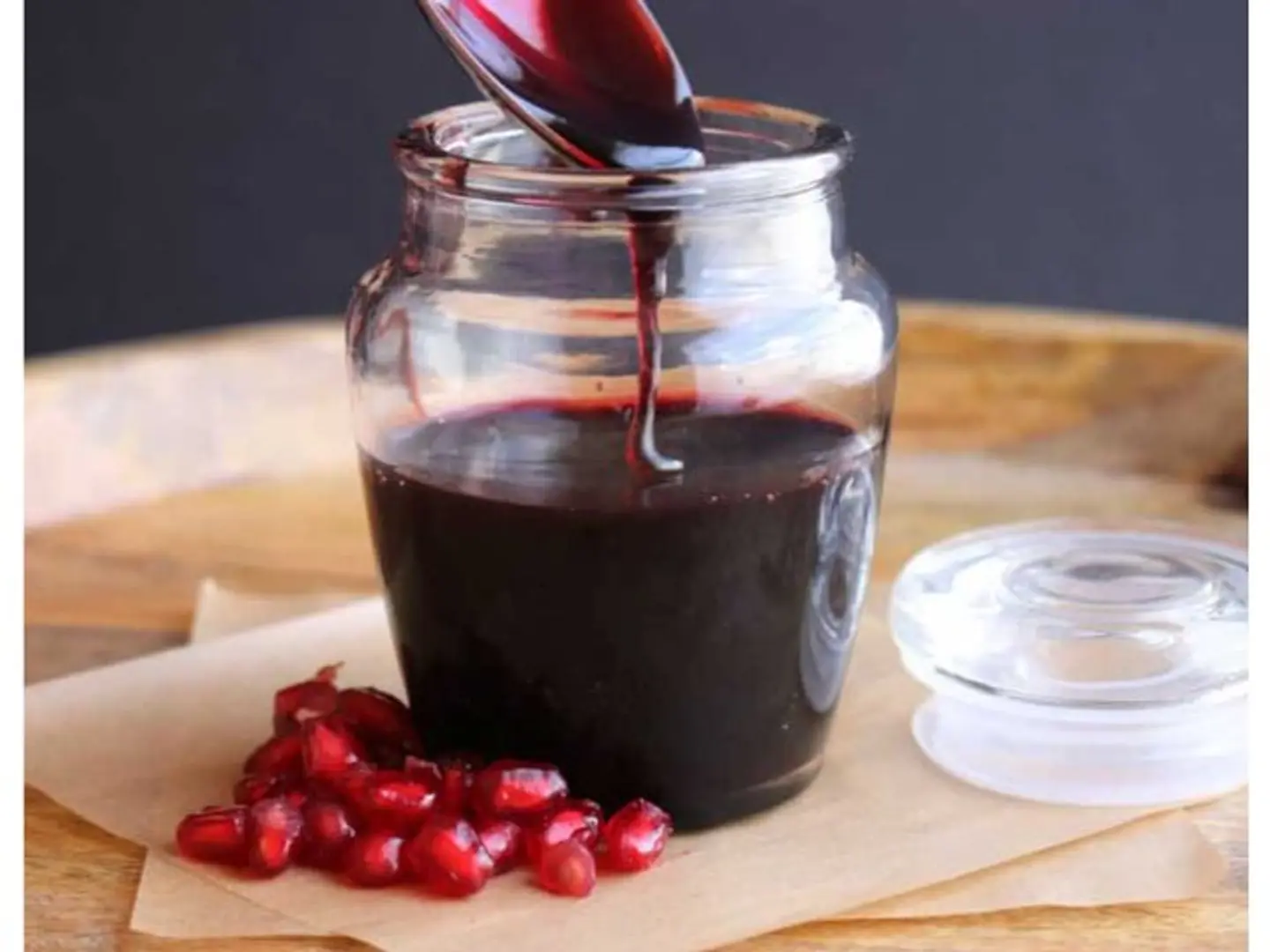
Comparing homemade and industrial pomegranate paste in terms of quality, shelf life, and international export standards is highly important. This article examines the main differences between the two types and identifies which one can better meet the demands of global markets. Understanding these characteristics is essential for importers and exporters to make informed product selections.
Quality and Purity: Evaluating Homemade Pomegranate Paste
Quality and purity are the most important factors in the production of homemade pomegranate paste. This type is typically made from fresh, natural pomegranates through a traditional process without chemical additives. As a result, it offers a more intense color, aroma, and flavor compared to industrial products. Homemade paste is usually made from fully ripened orchard pomegranates, which increases its natural sugar and antioxidant levels.
However, the biggest challenge for homemade paste in exports is the lack of consistency and industrial production standards. Each local producer uses different methods and heating ratios, meaning taste and thickness can vary from batch to batch. For global markets that require consistent quality and standardized specifications, this variability can be a serious issue.
Visually, homemade paste tends to be darker in color and more aromatic, but if stored improperly, it can develop mold or lose flavor. Nevertheless, for organic and preservative-free markets, it remains a very appealing option. European consumers and health-conscious buyers often seek such natural products—provided they are offered in hygienic, export-grade packaging.
Overall, homemade pomegranate paste represents authentic Iranian taste and tradition, but achieving stable export performance requires standardization in production and packaging.

Consistency and Scalability: Strengths of Industrial Pomegranate Paste
Industrial pomegranate paste is designed for large-scale production and precise quality control. Factories use controlled evaporation and heating systems to maintain a consistent Brix level (natural sugar concentration). This ensures that every batch of product remains uniform in color, flavor, and thickness—an essential factor for international export.
Factories producing industrial paste typically operate under strict sanitary supervision and hold certifications such as ISO, HACCP, and the Iranian National Standard. These accreditations build trust among foreign buyers and make global market entry easier. Moreover, sterilization and vacuum-sealed packaging extend shelf life to more than two years.
One major advantage of industrial production is its scalability for export. Bulk buyers, including food companies and sauce brands, rely on consistent supply. Industrial paste ensures large-scale production with steady quality year-round.
Economically, industrial manufacturing has lower per-unit costs since it relies on automation and less manual labor. However, some industrial pastes may lack the pure natural flavor due to added sweeteners or color enhancers. Still, for export markets where stability, hygiene, and consistency are key, industrial paste is the more professional and reliable option.

Meeting International Standards: Which Type Wins the Global Market?
To succeed in international markets, a product must meet key criteria such as hygiene standards, consistent quality, traceability, and appropriate packaging. In this regard, industrial pomegranate paste generally performs better, as every production step is monitored under certified quality systems. These products can be registered in global traceability systems and obtain official export certificates.
By contrast, homemade paste lacks formal quality control, preventing it from entering the export chain directly. However, in recent years, some Iranian companies have started collecting and refining homemade paste through semi-industrial methods—combining traditional flavor with export-grade processing. This hybrid model presents an excellent opportunity to preserve authentic taste while achieving international compliance.
European and Asian markets highly value natural and healthy products, yet standardization and production transparency remain their top priorities. Therefore, if small producers document their processes and adopt export-quality packaging, their chances of entering global markets will increase.
Ultimately, homemade paste wins in flavor and authenticity, while industrial paste dominates in consistency and international compliance. Combining these strengths—traditional authenticity in an industrial framework—is the key for Iranian brands to secure a lasting presence in global markets.

No views