


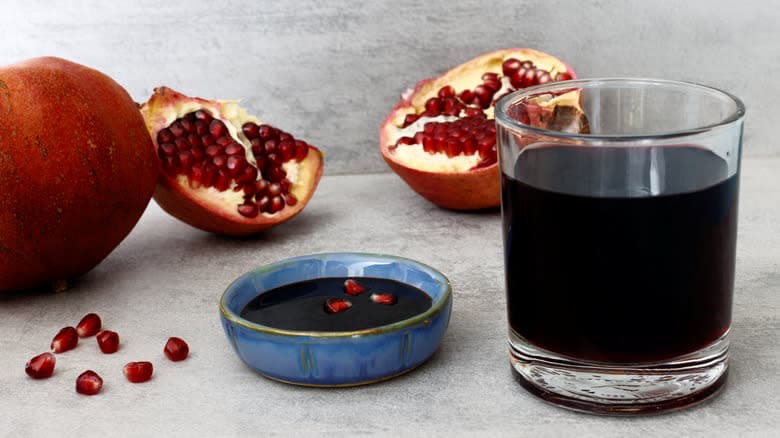
Export-grade pomegranate paste must have a natural and balanced taste, a deep and bright color, and proper thickness to convey a sense of quality to importers. International standards such as HACCP, ISO 22000, Codex, and heavy metal control must be followed. Hygienic and durable packaging with complete labeling—including date, batch number, ingredients, and country of origin—is essential.
Flavor, Color, and Texture Requirements
The sensory quality of pomegranate paste is the first element that influences importers’ perception. Taste, color, and texture must reflect the right balance between acidity and sweetness, natural pomegranate aroma, and an absence of unwanted bitterness. A paste that is excessively sweet or overly sour is rarely favored in professional markets. There should be sufficient acidity to keep the taste vibrant, but not so much that it becomes unpleasant. If added sugar is used, it must be minimal and carefully measured, while most markets prefer the use of natural pomegranate sugars.
The color of export-quality pomegranate paste must be deep and natural, indicating the presence of beneficial pigments such as anthocyanins. It should maintain a bright natural red hue, avoiding excessive darkening or brownish tones caused by improper heating or poor storage. Color uniformity and clarity are especially important for transparent packaging such as glass or PET containers; any cloudiness, sediment, or suspended particles should be minimized.
Texture or viscosity is another key factor. It should be thick enough to convey quality but not so dense that it becomes difficult to use or causes separation between liquid and solids. Viscosity can be measured through the Brix value, which represents sugar concentration—many markets require a minimum Brix level for premium-grade products. The ideal texture should be soft yet consistent, spreadable but not watery, allowing easy blending with other ingredients.

Food Safety, Certification, and Chemical Standards
Global importers are highly sensitive to food safety. One of the first inspection points is verifying that the paste has been produced under standards such as HACCP or ISO 22000, ensuring that all health hazards are identified and controlled—from raw material sourcing to final product transportation.
Pesticide residue control is a strict requirement in European, American, and Japanese markets. Importers typically request accredited lab results proving that no harmful pesticides or heavy metals such as lead, cadmium, mercury, or arsenic exceed permissible levels. Monitoring soil and water quality and documenting pesticide use throughout the farming process are crucial.
Health and quarantine certificates are also essential. Exporters must be able to provide phytosanitary certificates verifying that the product is free from plant pests. In some markets, organic or sustainability/social responsibility certificates provide a competitive advantage. For instance, using certified organic labels or adhering to GlobalGAP or social quality programs can open access to premium market segments.
In-process quality control within factories is also important. At every stage of production, samples must be tested to ensure compliance with quality benchmarks. Cooking temperature, time, water activity (aw), moisture content, and microbiological parameters such as mold, yeast, and bacteria must be carefully monitored. Final packaging and storage conditions must prevent microbial growth.
Chemically, aside from pesticides and heavy metals, importers may be sensitive to additives or artificial colorants. Additives must be approved and used only in minimal quantities according to Codex standards or the destination country’s regulations. Natural acid composition should be preserved, and excessive artificial acidity or off-odors from fermentation must be avoided.

Packaging, Labeling, and Traceability Standards
Export packaging must be designed to withstand transportation, temperature fluctuations, humidity, and light exposure while maintaining product quality. Suitable options include glass jars or metal cans with acid-resistant inner coatings. If polymer materials are used, they must be food-grade and resistant to pomegranate acid. Protection from direct sunlight and air exposure is crucial to prevent oxidation, color degradation, and flavor loss.
Packaging design must be suitable for international transport—impact-resistant, vibration-resistant, and pressure-resistant. Using inner protective layers such as foam inserts, multilayer export cartons, and pallet stabilization methods is recommended. For marine or air freight, packaging must withstand temperature, humidity, and pressure variations.
Labeling is an inseparable part of export compliance. Labels must include the product name, ingredients, Brix or concentration level, net weight, production date, expiry date, lot number, country of origin, and manufacturer/packer information. In stricter markets, nutritional tables, health permits, or certifications (HACCP, ISO, Organic) are mandatory. Claims like ‘No Additives,’ ‘Organic,’ or ‘Low Sugar’ must be verifiable and accurate.
Traceability is essential in the export chain. Importers must know the source orchard, harvest date, processing conditions, and storage and shipping environments. Batch numbers, temperature logs, warehouse documentation, and lab results are all part of traceability systems.
Some international markets have specific packaging regulations: outer cartons and pallets must meet ISPM-15 wood treatment standards, and packaging materials should have minimal environmental impact. Recyclable or eco-friendly packaging is a competitive advantage.
Finally, graphic design and appearance also play a vital role. Professionally designed packaging with strong visual identity, clear branding, and attractive colors enhances importer and consumer perception. However, graphical design should never obscure essential label information, and compliance with destination market labeling laws must always be ensured to avoid customs issues.

No views