


Knowing how to tell the difference between natural and industrial pomegranate paste is essential for anyone who wants a healthy and flavorful product.
In this guide, we’ll explain the key differences between the two — including color, taste, texture, and ingredients — so you can make the right choice when buying authentic pomegranate paste.
Color and Texture Differences Between Natural and Industrial Paste
One of the most visible distinctions between natural and industrial pomegranate paste is its color and texture.
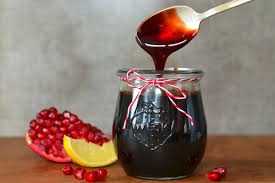
Natural pomegranate paste usually has a darker shade, close to brownish-red, which comes from the long boiling process of pomegranate seeds and their natural concentration.
In contrast, industrial paste tends to appear bright red — often due to the addition of food coloring and preservatives.
Natural paste has a thick, sticky, and uniform consistency with no added particles.
When touched, it feels dense and slightly tacky, and it doesn’t flow easily from the spoon.
Industrial paste, however, is more watery and light, and though it may resist mold longer, it often lacks the authentic taste of real pomegranate.
Here’s a simple test:
Mix a small amount of paste with water.
If the color spreads evenly and doesn’t settle at the bottom, it’s likely natural.
Industrial paste usually separates or shows uneven color after mixing.
Ultimately, the color and texture of natural paste reflect its traditional, additive-free production, while industrial paste often looks more attractive but is mass-produced.
For genuine, additive-free options, it’s best to buy from trusted suppliers offering export-quality natural pomegranate paste.
Taste and Ingredients: What Makes Natural Pomegranate Paste Healthier
Another major difference lies in taste and composition.
Natural pomegranate paste is made by boiling fresh pomegranate seeds without any preservatives or added sugar, which gives it a tangy, slightly astringent, and aromatic flavor.
Industrial producers often add sugar, salt, and citric acid to adjust the flavor and extend shelf life.
These additives make industrial paste taste uniform and less natural, while natural paste varies in flavor depending on the pomegranate type (sour or sweet).
This natural variety is a key sign of authenticity.
From a health perspective, natural pomegranate paste is rich in antioxidants, vitamin C, and heart-friendly compounds, since it’s produced without chemical ingredients.
Industrial paste, however, loses much of its nutritional value due to preservatives and additives and may not be ideal for long-term consumption.
If you care about your health and the purity of your food, always choose natural pomegranate paste.
Reputable suppliers offer additive-free paste sourced directly from certified Iranian producers, ensuring that every jar delivers genuine taste and nutritional value.

How to Identify Authentic Natural Paste When Buying
When purchasing pomegranate paste, a few key tips can help you identify natural products from industrial ones.
Check the packaging and label.
Natural paste often comes in simple packaging without chemical additives listed.
Industrial products, on the other hand, frequently include “food color,” “citric acid,” or “sugar” on the label.
Smell the paste.
Natural paste has a deep, fruity aroma similar to fresh pomegranate seeds, while industrial paste smells mild and slightly artificial.
Inspect the color and consistency.
Natural paste should be thick, dark, and even in texture, without separation or sediment.
Taste it.
Natural paste has a tart, sticky flavor that lingers, while industrial paste often tastes sweet or salty due to additives.
Ultimately, the safest way to ensure you’re buying natural pomegranate paste is to purchase from trusted suppliers or producers known for offering authentic and export-quality Iranian paste.
For consumers who value both health and taste, choosing a natural product guarantees a richer flavor, higher nutritional value, and a truly traditional experience.

No views